Journal · Stone guides
Tiger's Eye: The Stone With Light Inside
What tiger's eye is, why a band of light slides across it, where it comes from, how red tiger's eye gets its colour, and how to pick and wear a good one.
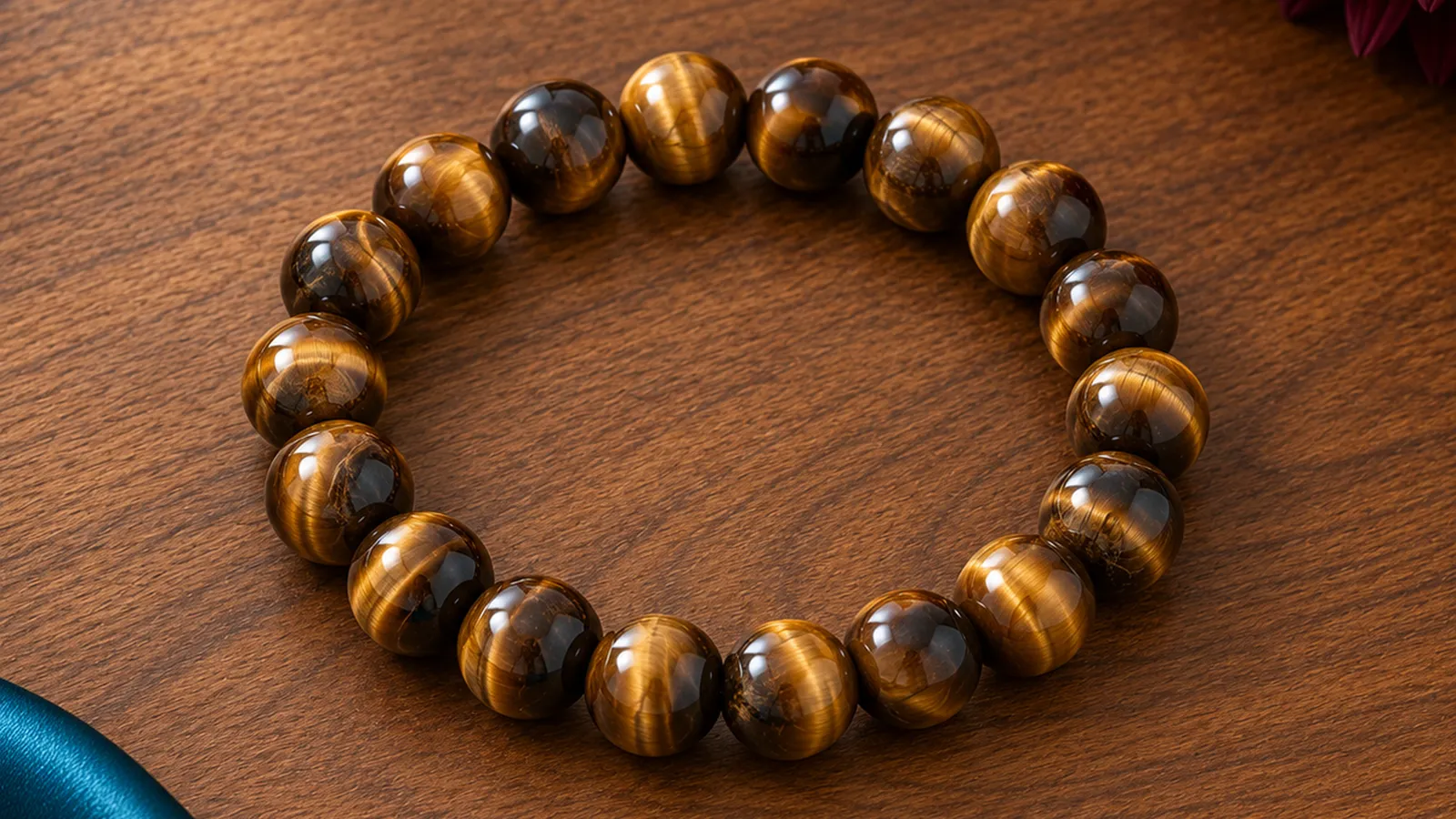
Hold a tiger's eye bead in the sun and turn it slowly. A stripe of gold light slides across the surface, like light moving over silk. Stop turning, and the stripe stops too.
Nothing is painted on. The light comes from inside the stone. Once you know why, you will never look at a tiger's eye bracelet the same way again.
What is tiger's eye?
Tiger's eye is a kind of quartz, the same mineral family as rock crystal and amethyst. What makes it different is what is trapped inside: thousands of very fine fibres of a blue mineral called crocidolite, all lying side by side.
Over time, iron in those fibres turned into iron oxides, the same family of compounds as rust. That is where the honey, gold and brown colours come from. When the fibres keep more of their original colour, the stone looks blue-grey, and it is sold as hawk's eye.
For more than a century, scientists believed quartz had slowly replaced the fibres one by one, copying their shape. A 2003 study from Penn State University told a different story. It found that the quartz and the fibres grew together, inside a hairline crack in the rock that opened and sealed again and again. Each opening added a thin new layer. That is why tiger's eye is banded, stripe after stripe.
Because it is quartz, tiger's eye is a hard stone, 6.5 to 7 on the Mohs scale of hardness. It handles everyday wear well.
Why tiger's eye seems to glow
The moving band of light has a name: chatoyancy. The word comes from the French for "cat's eye", because the band looks like the narrow pupil of a cat.
It happens when light hits a lot of thin, parallel fibres at once. Each fibre reflects a little light, and together they make one bright line that runs across the fibres. Tilt the stone, move the light, or move your head, and the line moves with it.
Cutting matters. The effect shows best on a curved surface, so tiger's eye is usually cut into smooth domes and round beads. On a bead, the band of light glides over the curve as you turn your wrist.
Where does tiger's eye come from?
Southern Africa is the best-known home of tiger's eye. The classic source is the Northern Cape of South Africa, in a range of hills called the Asbestos Mountains, which runs from Kuruman south to Prieska. Griquatown sits in its foothills, and the area was once known as Griqualand West. In old books you may even see tiger's eye called griqualandite, after the place.
The same hills were mined for crocidolite for decades, from the 1890s onwards. In many places in these hills the fibre has been turned to stone, and that is where tiger's eye and hawk's eye are found.
Tiger's eye is also found in Western Australia, Namibia, India, Myanmar, the United States, Brazil and other countries. So the stone on your wrist is a piece of very old rock with a long road behind it.
We name our bracelets after places in Kenya, not after where the stone was found. Our Simba Gold is named for the lion, simba: large, glossy gold and brown beads, the classic tiger's eye look.
Red tiger's eye: how it gets its colour
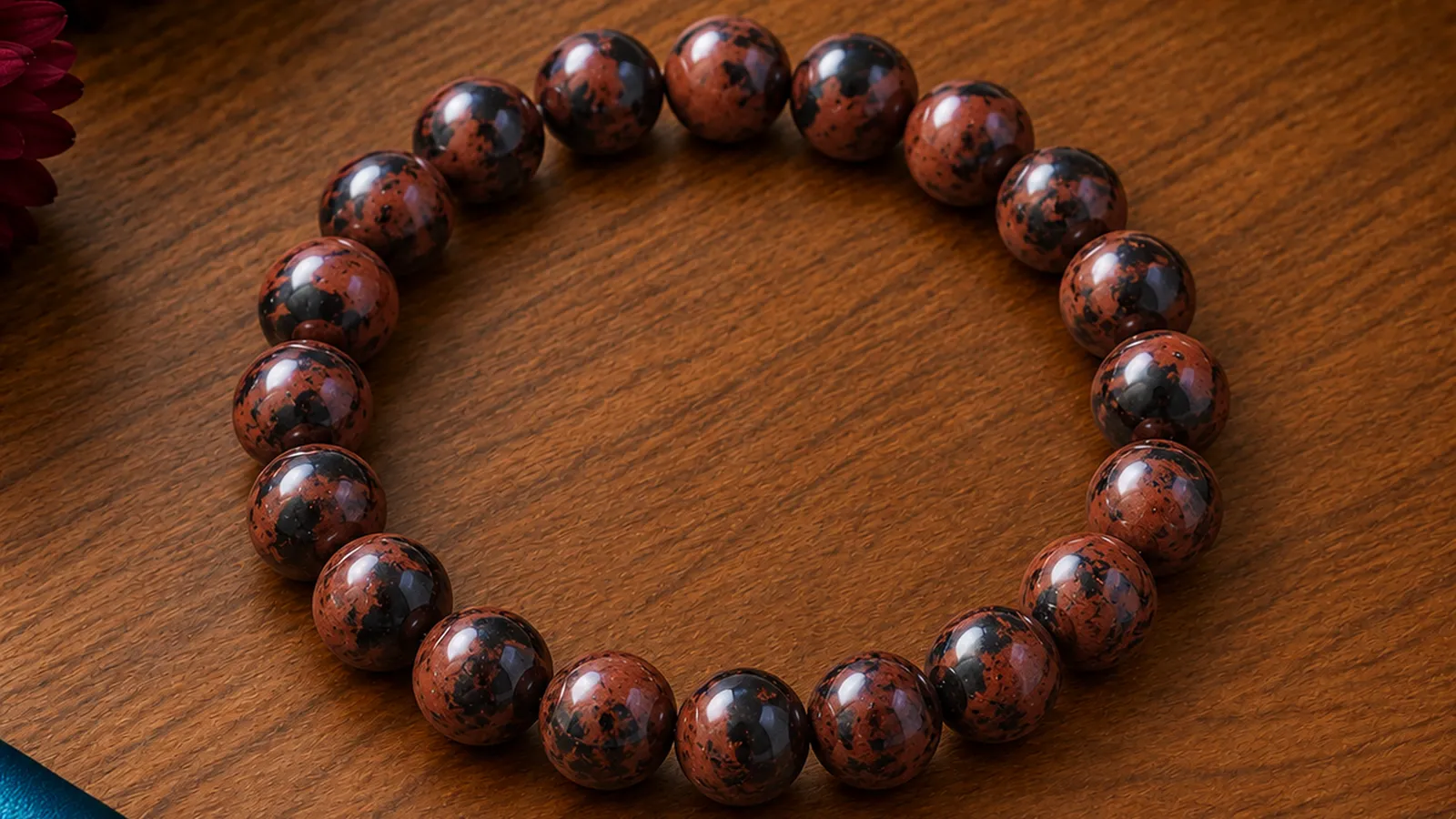
Red tiger's eye has the same silky band of light, in deep red-brown instead of gold. It is still tiger's eye. The difference is usually heat.
Remember the iron oxides that give tiger's eye its colour? The yellow-brown kind, goethite, turns into red-brown hematite when it is heated, and it does so at a fairly low temperature. Most red tiger's eye sold today is gold or brown tiger's eye that has been gently heated to bring out that red. The change is stable and permanent, and it is a normal, accepted practice in the stone trade. Naturally red tiger's eye exists but is less common.
Heated or not, red tiger's eye is genuine tiger's eye, with the same quartz, the same fibres and the same moving light. If you are curious about a particular bracelet, ask us.
Our Mara Dusk is a red tiger's eye bracelet, named for evening light over the Maasai Mara.
How to recognise good tiger's eye
You do not need a lab. You need daylight and a little patience.
- Look for the band. Turn the bead under one light, like a window or the sun. Good tiger's eye shows a clear, bright band that moves cleanly across the bead. Weaker stone shows a wide, blurry shimmer, or almost nothing.
- Look at the colour. Rich, even gold and brown tones are the most prized. Dull or patchy colour is less striking.
- Expect variety. Natural stone is not printed. Each bead has its own stripes, and some will be darker or lighter than others. A strand where every bead looks exactly the same is worth a question.
- Feel it. Tiger's eye is quartz, so it feels cool, smooth and solid in the hand.
You will find all our tiger's eye pieces on the tiger's eye bracelets page, each with photos so you can look at the bands yourself.
How to wear tiger's eye
Tiger's eye is warm. It sits between gold and brown, so it goes with more than you might expect:
- With a watch: a brown leather strap and tiger's eye look made for each other. Gold or steel works too.
- With dark colours: against black, navy or olive, the gold bands stand out.
- In a stack: pair it with something matte and dark so the shine has something to play against.
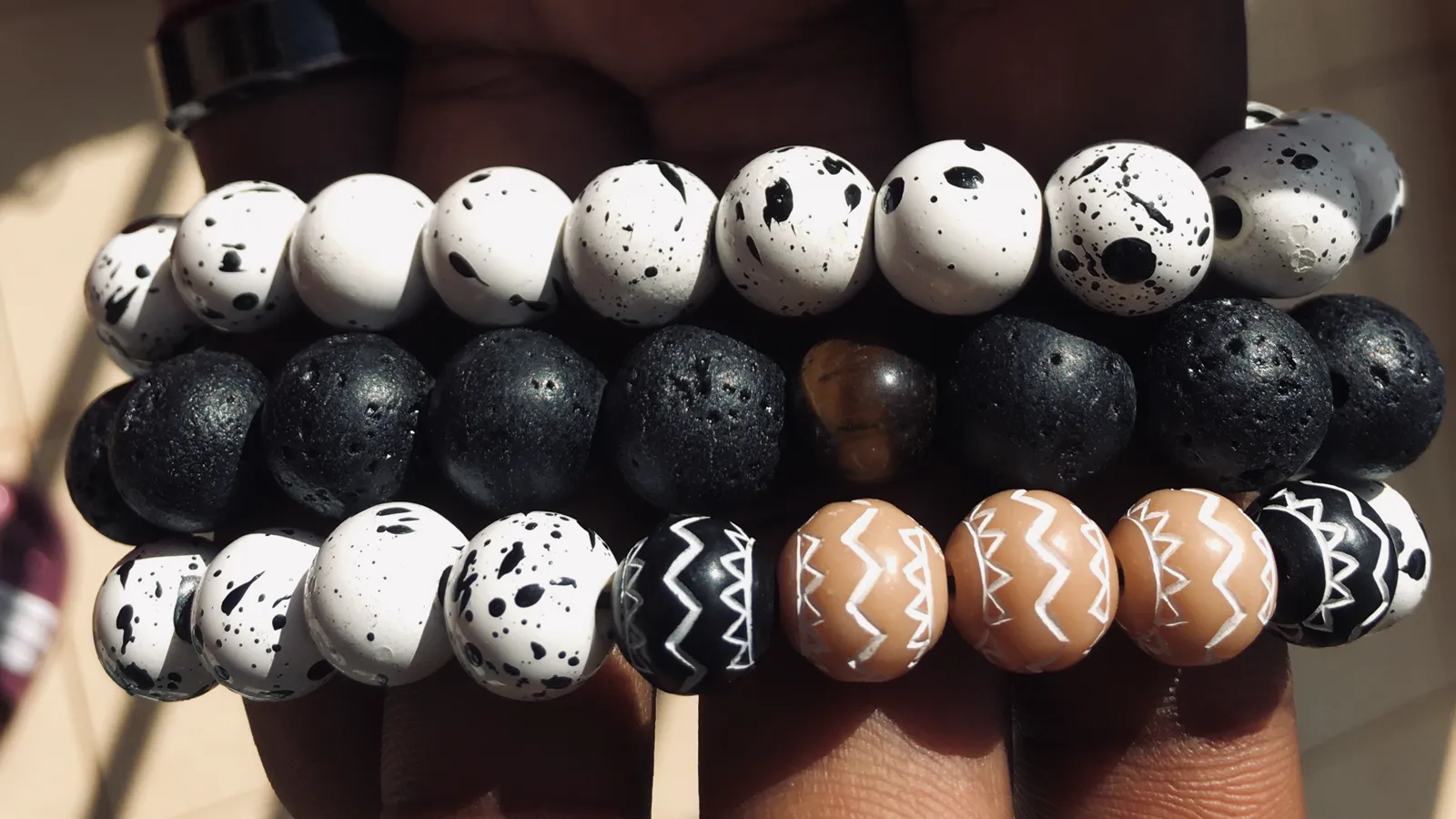
That last idea can be as small as one bead. Look at this black lava bracelet from our own photo shoot. In the middle of the row of matte volcanic rock sits a single tiger's eye bead.

Our Longonot Black is an everyday black lava bracelet, ready to wear beside your tiger's eye.
Or make your own. Start with Simba Gold tiger's eye, then mix in a second stone, choose a style and pick your size.
To keep the shine, take your bracelet off before swimming, showering or training, and keep it away from perfume and lotions. Wipe it with a soft, dry cloth now and then.
Tiger's eye meaning
Tiger's eye is traditionally associated with focus and confidence. In some places it was believed to protect against the evil eye, and Roman soldiers are said to have worn engraved tiger's eye for protection in battle.
These are beliefs, passed down over time, not proven effects. But it is easy to see why people gave this stone a strong meaning. It looks alive. It holds a line of light that follows you as you move.
Next time you are out in the sun, turn your wrist slowly and watch the light slide across the beads.
Still deciding? Find your bracelet in a few questions, or try one on at ManCave.