Journal · Stone guides
Lava Stone: The Volcano on Your Wrist
What lava stone is, why it is full of tiny holes, and the Kenyan volcanoes behind our lava bracelets: Longonot, Chyulu, Suswa and Menengai.
Pick up a lava stone bead and the first thing you notice is how light it is. The second is the surface. It is covered in tiny holes, like a sponge that turned to stone.
That is exactly what it is. Every bead on a lava bracelet was once liquid rock, pushed up from deep underground, and every one of those holes is a bubble of gas that never made it out.
Kenya knows this rock well. Drive from Nairobi to Naivasha and you pass close to it.
What lava stone actually is
Lava stone beads are usually cut from basalt, the most common volcanic rock on Earth. When basalt lava pours out of a volcano, it is full of dissolved gas, a little like an opened soda. As the lava cools and hardens, that gas escapes as bubbles. Some bubbles get trapped in the hardening rock, and they leave behind small, rounded holes.
Geologists call this rock vesicular. Most of us just call it lava rock. The faster the lava cools, the more bubbles stay locked inside.
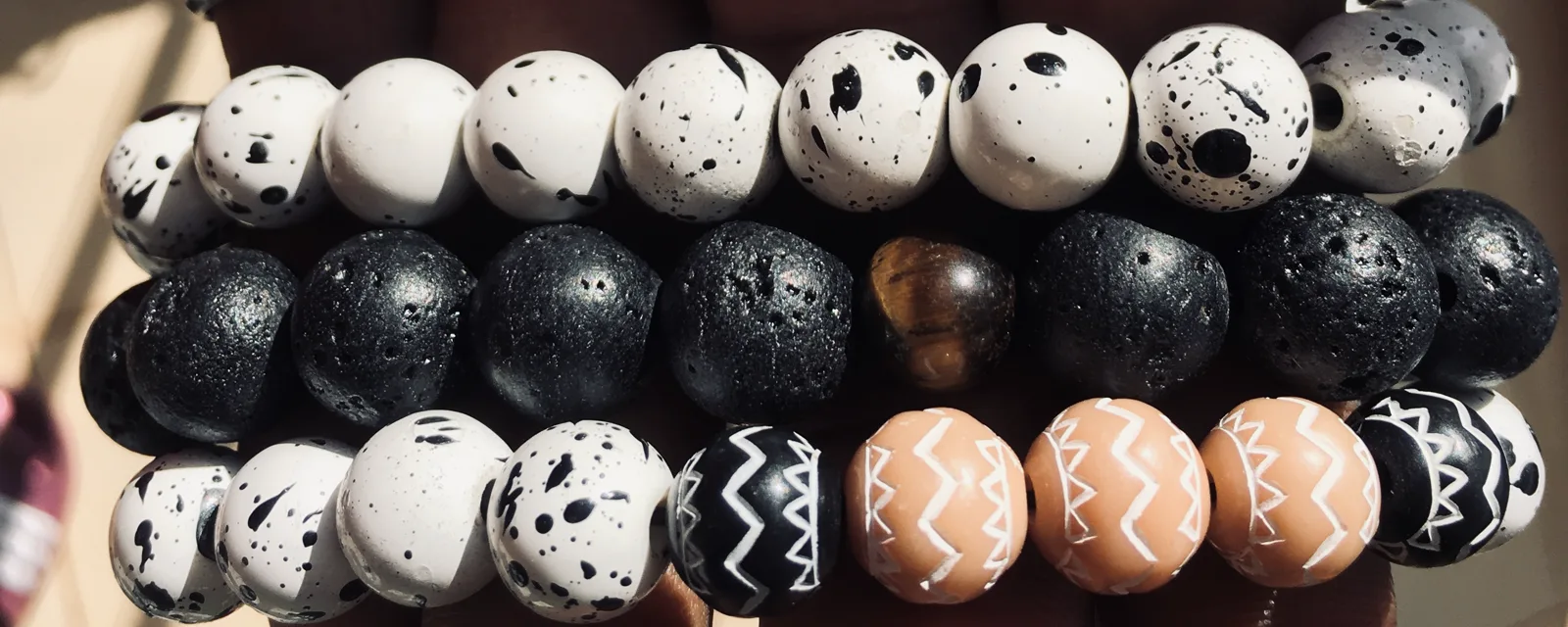
Those holes are why a lava bracelet weighs almost nothing on your wrist. They also give it the matte, textured look that sits so well beside a watch or a smooth stone. Some people put a drop of perfume or essential oil on their lava beads, because the pores hold the scent for a while.
Four volcanoes, four names
We name our bracelets after places in Kenya. For lava, the choice made itself: the Rift Valley and the south of the country are full of volcanoes. The names are a tribute to these mountains. We are not saying the beads were dug from them.
Longonot
Mount Longonot rises above the road to Naivasha, its wide crater visible from far away. Its last known eruption was in the 1860s, a lava flow on its northern side that is remembered in Maasai oral tradition. Today it is a national park, with a popular hike around the crater rim.
The Longonot Black is our everyday lava bracelet: small, black beads that pair with almost anything.
Chyulu
The Chyulu Hills run along the northern edge of Tsavo West. They look green and gentle, but they are a volcanic field of many small cones. Near the Chyulu gate of Tsavo West lies the Shaitani lava flow, a sheet of black rock from eruptions in the 1850s. Walk on it and you are standing on lava that cooled less than two centuries ago.
The Chyulu Black takes its name from that flow: larger black lava beads, bolder on the wrist.
Suswa
Mount Suswa, between the Nairobi–Narok road and the Rift Valley floor, hides one of Kenya's strangest sights: lava tubes. When a river of lava cools on the outside first, the outer crust hardens into a roof while the molten rock inside keeps flowing out. What is left behind is a tunnel. Suswa has more than 30 cave entrances, and in one of them, known as Baboon Parliament, baboons shelter from the sun.
The Suswa Rust, a red lava bracelet, is named after this mountain.
Menengai
Above Nakuru sits Menengai, a collapsed volcano whose crater, or caldera, is about 12 kilometres across. It is the largest volcanic caldera in Kenya, and from its rim you look down into a vast bowl of old lava.
The Menengai Rust, a muted red lava bracelet, carries its name.
Why some lava is red
Most lava cools black or dark grey. But lava is rich in iron, and when that iron meets air or steam while the rock is still hot, it oxidises in minutes, the same chemistry as rust. The rock comes out red, rust or orange. That is why the cinder cones on many volcanoes look red from a distance.
Our Suswa Rust, Menengai Rust and Moto Lava carry that colour naturally. They are not dyed. Black or red, every one of them is volcanic rock exactly as it cooled.
When lava cools too fast: obsidian
Sometimes lava cools so quickly that it has no time to form crystals or even bubbles. It turns into glass instead. That glass is obsidian.
The Rift Valley around Naivasha and Nakuru is one of the richest obsidian landscapes in the world. Between about 3,000 and 1,500 years ago, herders in the region quarried obsidian on the slopes of Mount Eburru, shaped it into tools and traded it across the region. Hell's Gate, whose gorge is known as Ol Njorowa, is known for its black volcanic glass too.
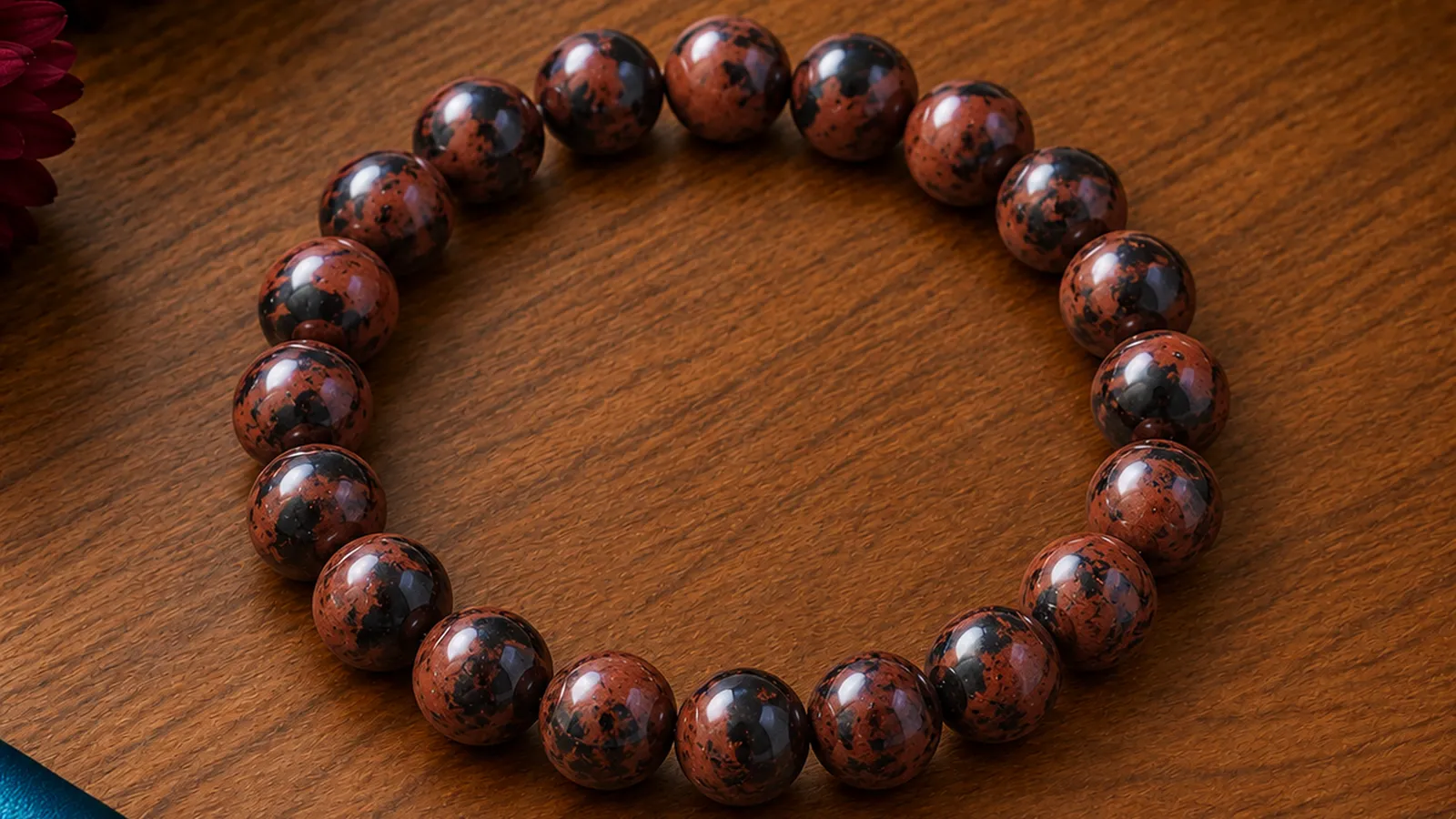
Our Njorowa Ember is mahogany obsidian: glossy black with red-brown streaks, like embers in a fire. It is lava's polished cousin, and it sits beautifully next to the matte texture of lava stone.
Wearing lava
Lava is the easy bracelet. It is light, it is dark, and it goes with almost everything:
- With a watch: the matte beads will not compete with a steel or leather strap.
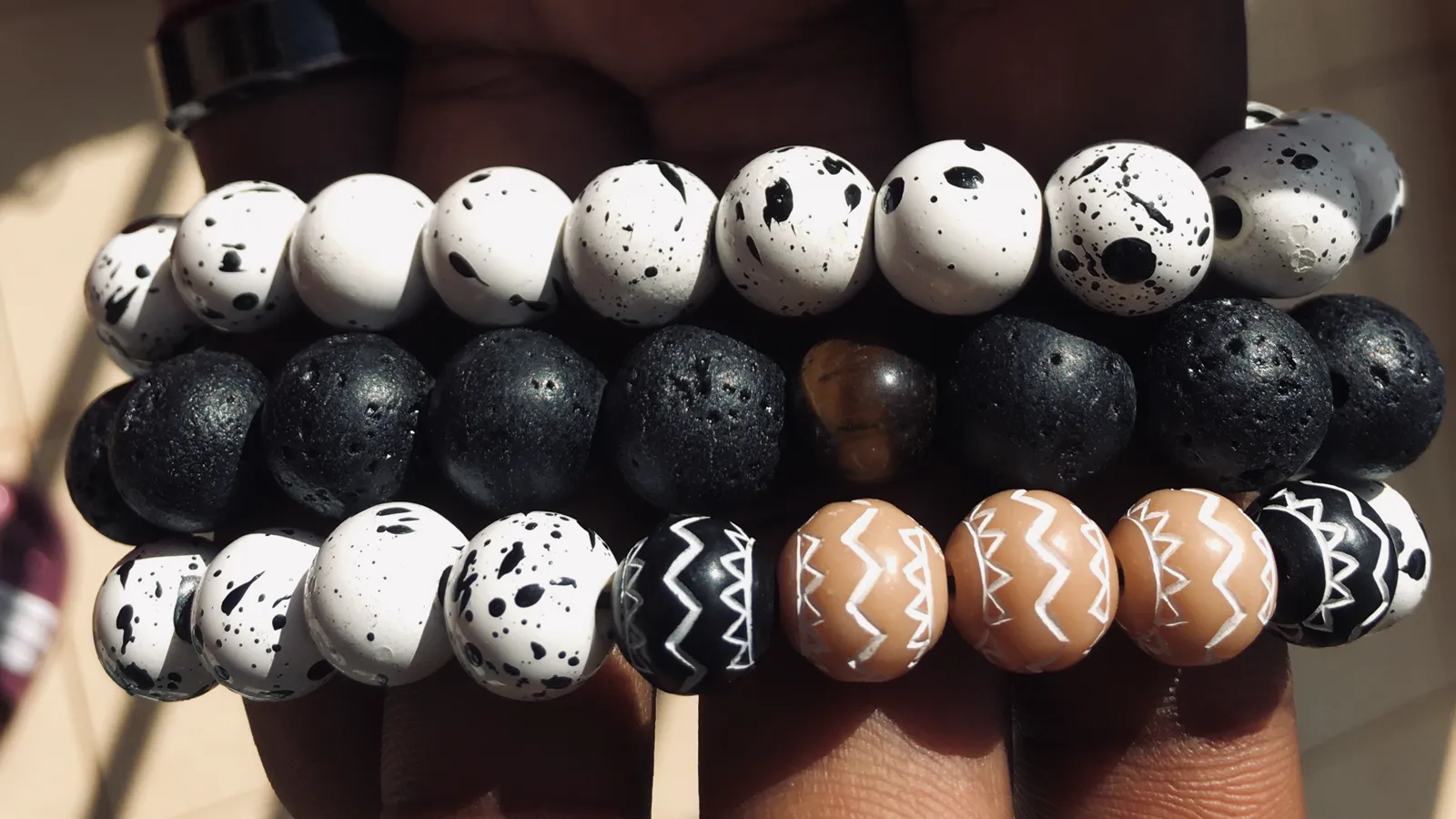
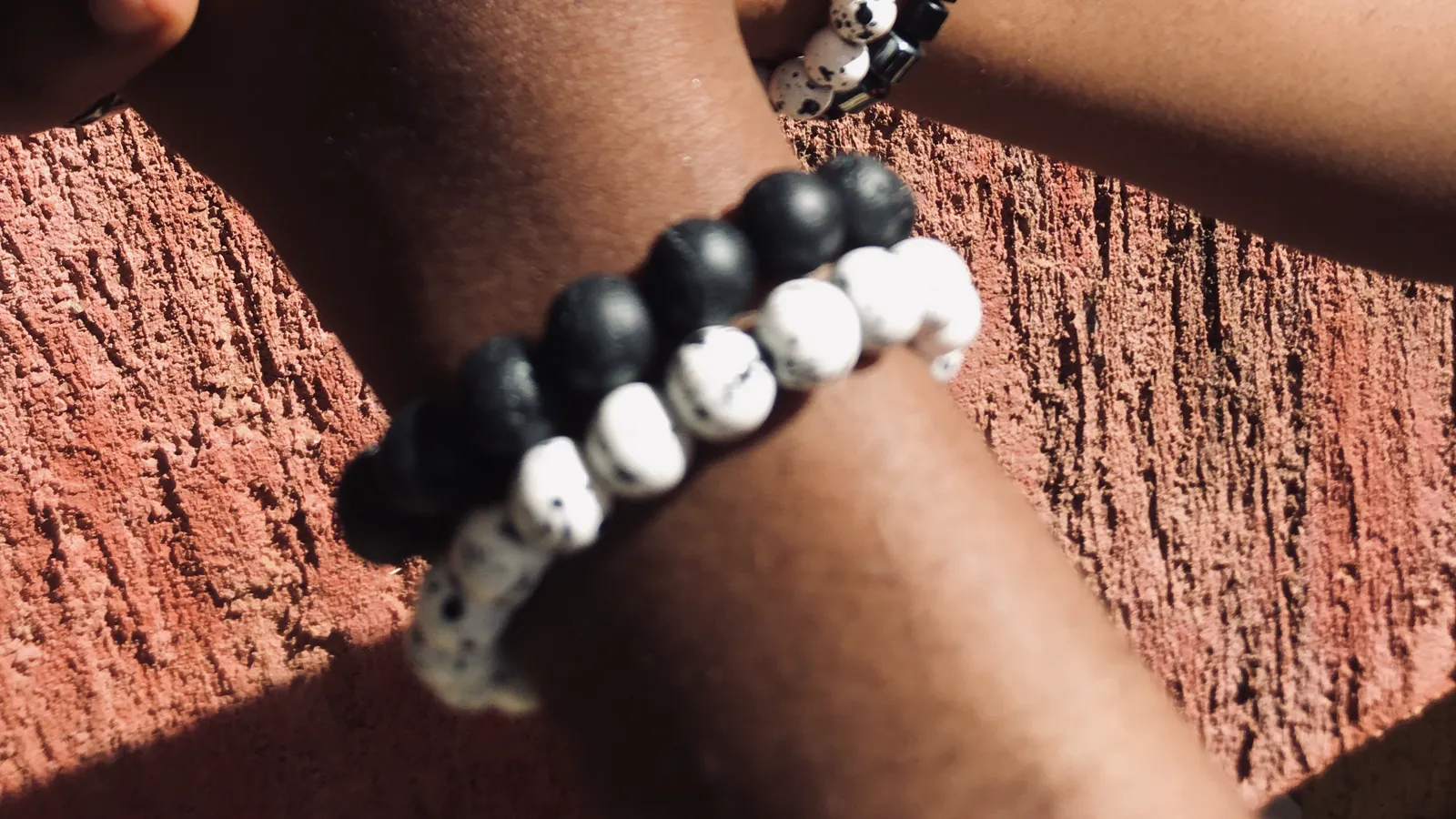
- In a stack: put it beside something smooth, like tiger's eye or white beads, and let the textures play against each other.
- On its own: black lava reads as calm and quiet, the kind of piece you forget you are wearing.
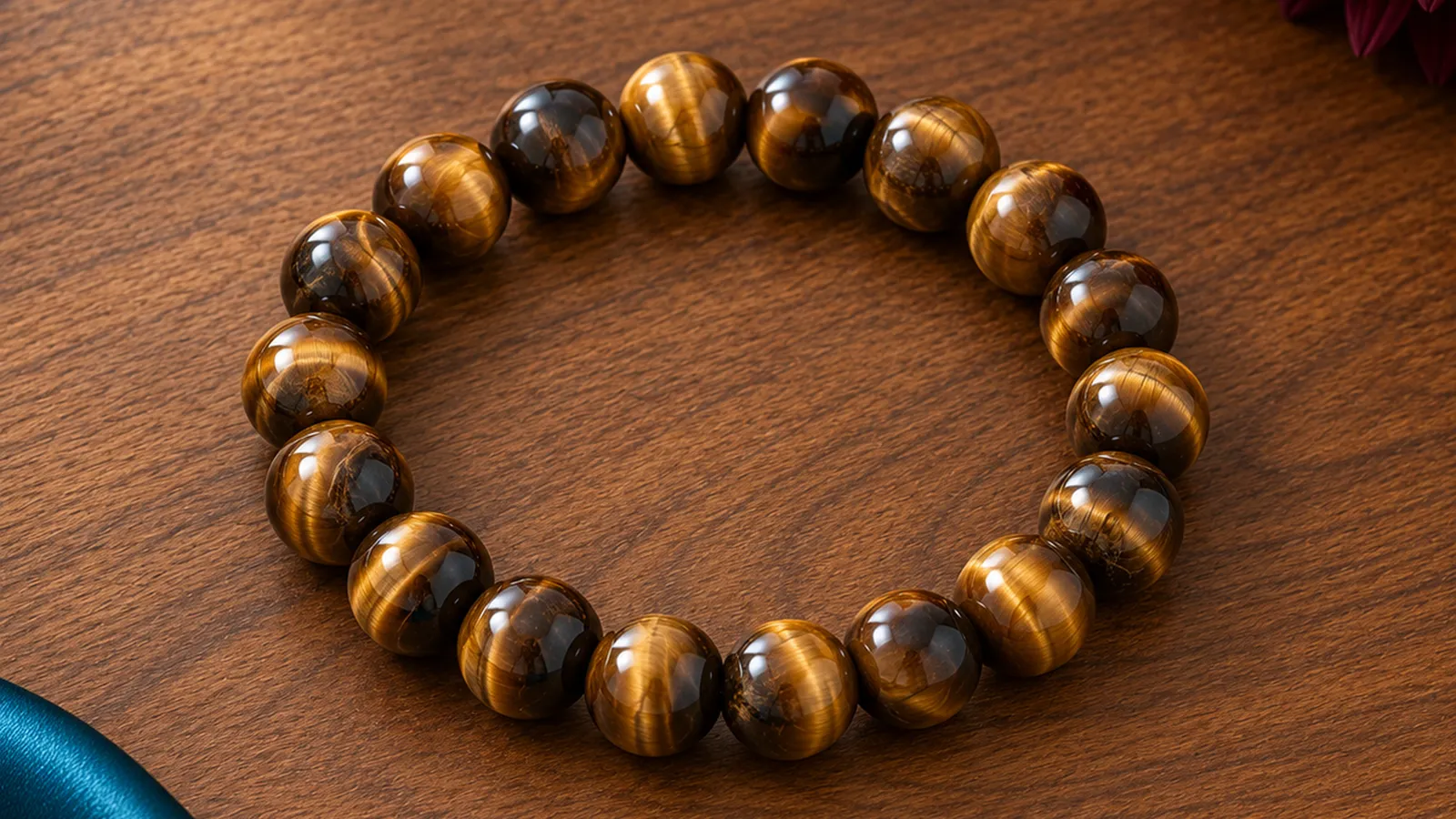
Look again at the photo of the pores above. In the middle of that black lava row there is a single golden-brown bead: tiger's eye. One warm stone in a row of black rock is all it takes to make the bracelet yours.
What it is said to mean
Lava stone is traditionally associated with grounding: feeling steady, calm and connected to the earth. It makes sense. This is rock that came from deep inside the planet and cooled under an open sky. Whether you wear it for that meaning or simply for the look, you are carrying a piece of a volcano on your wrist.
Next time you drive past Longonot, look up at the crater. Then look down at your wrist.
Still deciding? Find your bracelet in a few questions, or try one on at ManCave.